

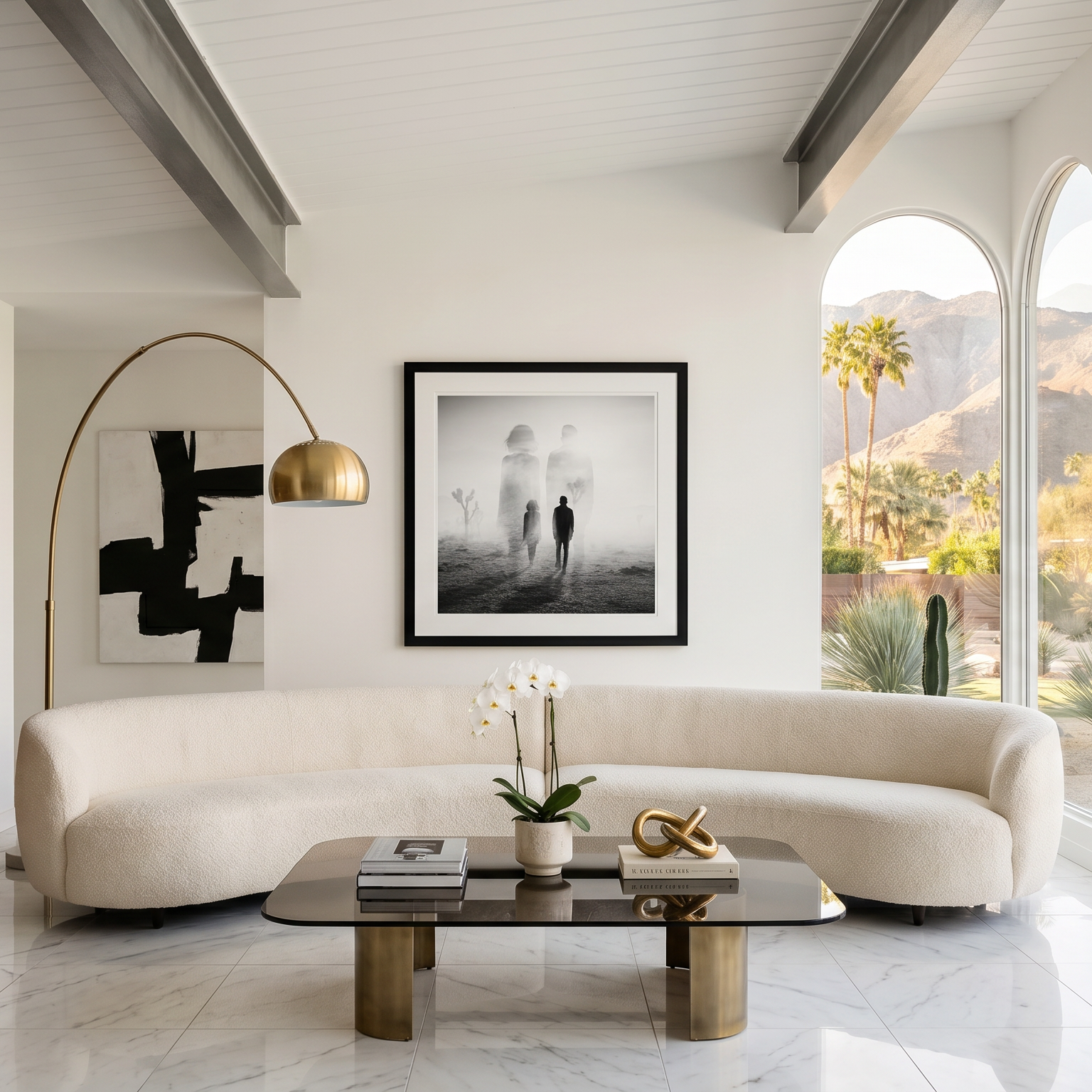
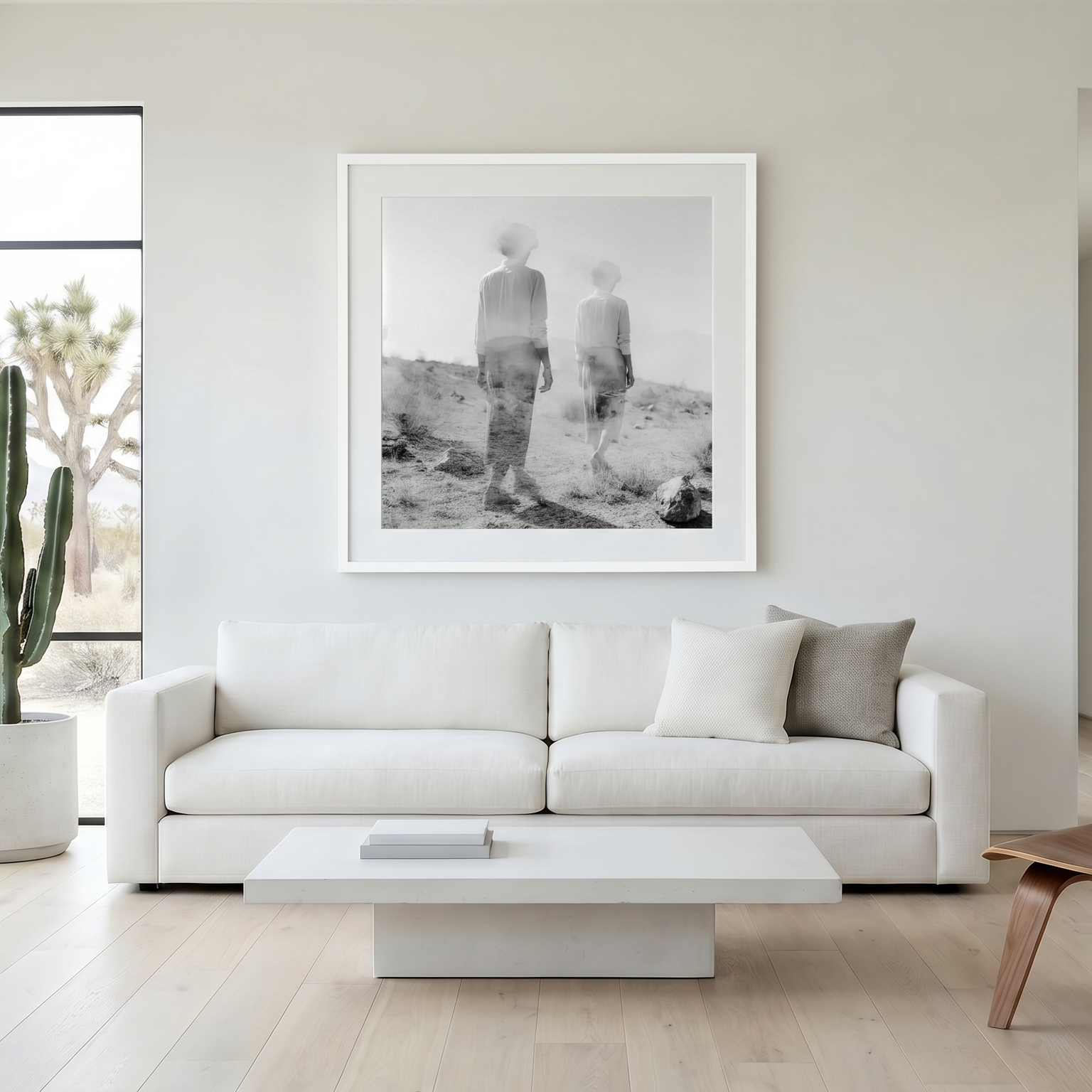
Sensorial Design Products Pictured: Joshua Tree 1 Fine Art Print
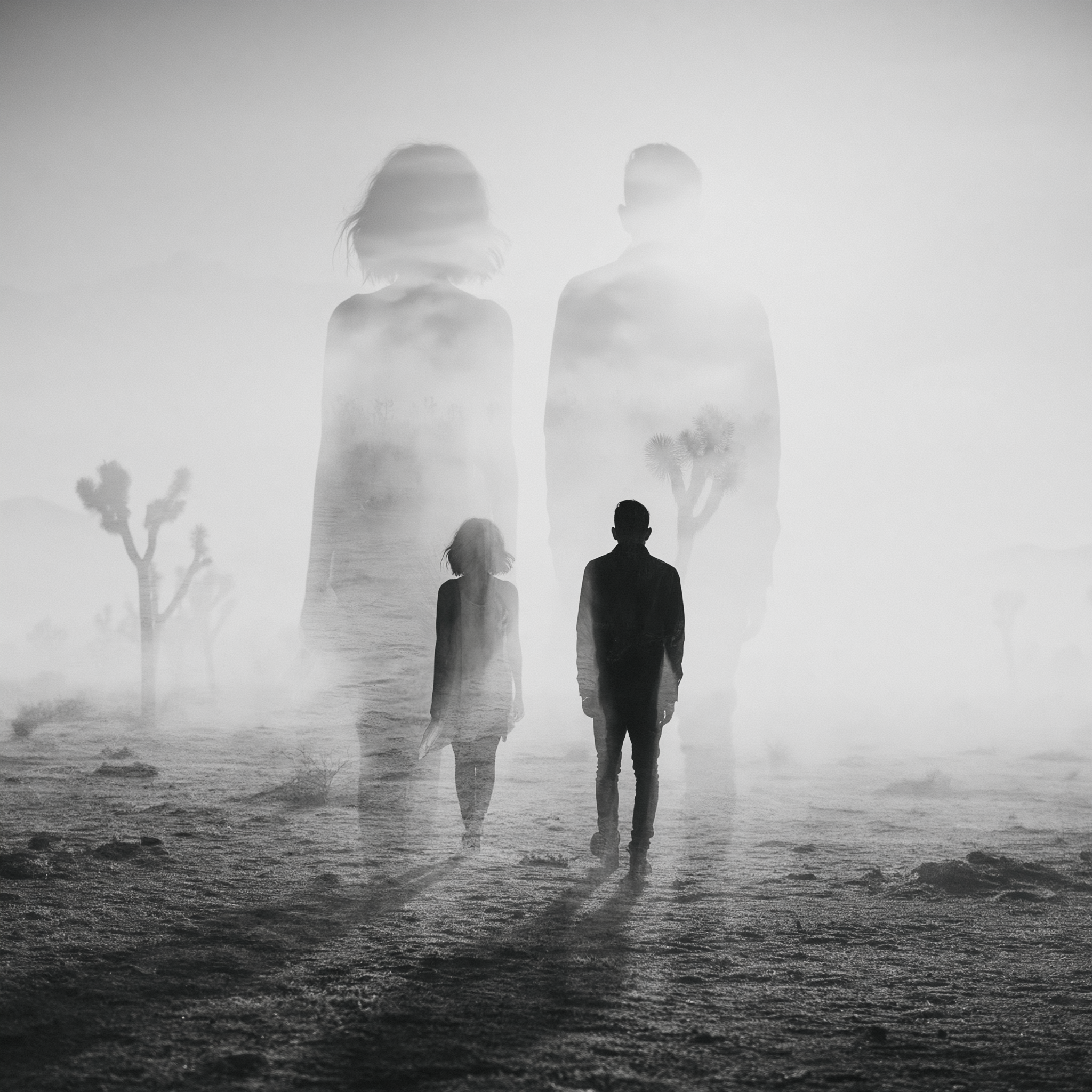
I have traveled to Joshua Tree many times, and each visit I feel the same quiet connection to the place. The land is spare and ancient. The light arrives softly. In the early hours, fog can settle low across the desert floor, and the Joshua trees appear and disappear inside it like figures half-remembered.
That feeling stayed with me long after I left. This series is my attempt to hold onto it. Not a record of the landscape, but the sensation of being inside it, of the land and the body briefly becoming one thing.
Surreal Double-Exposure Art: Between Presence and Disappearance
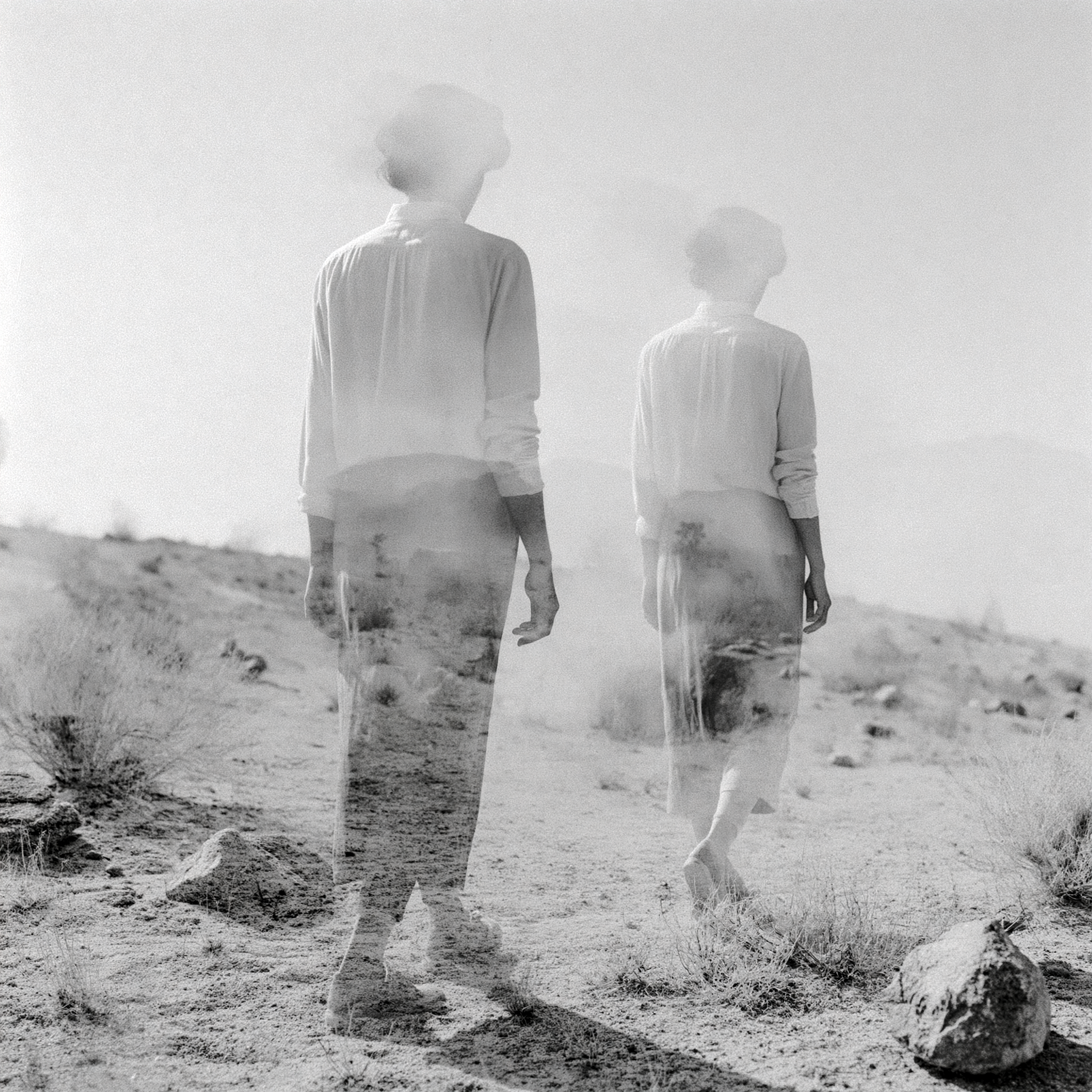
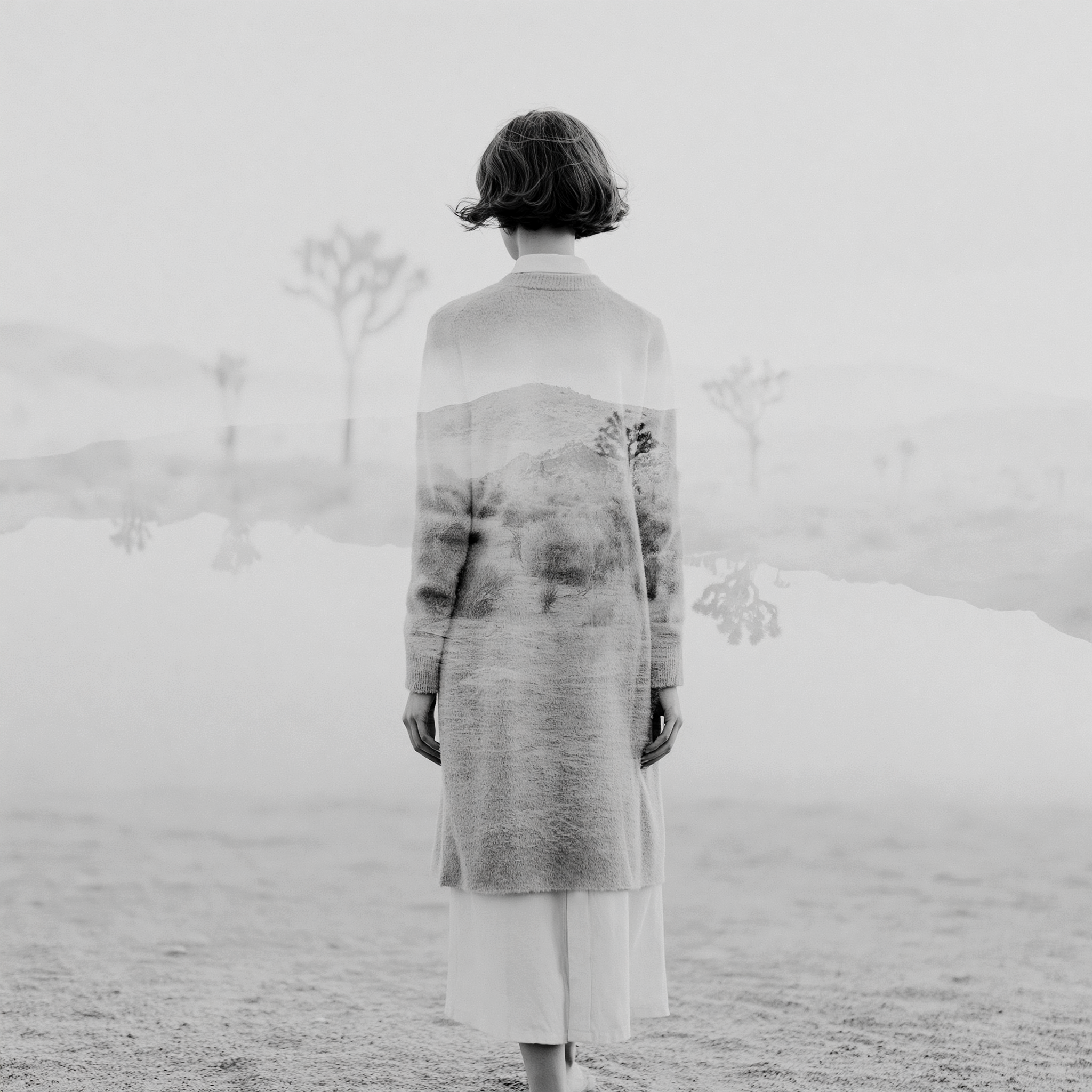
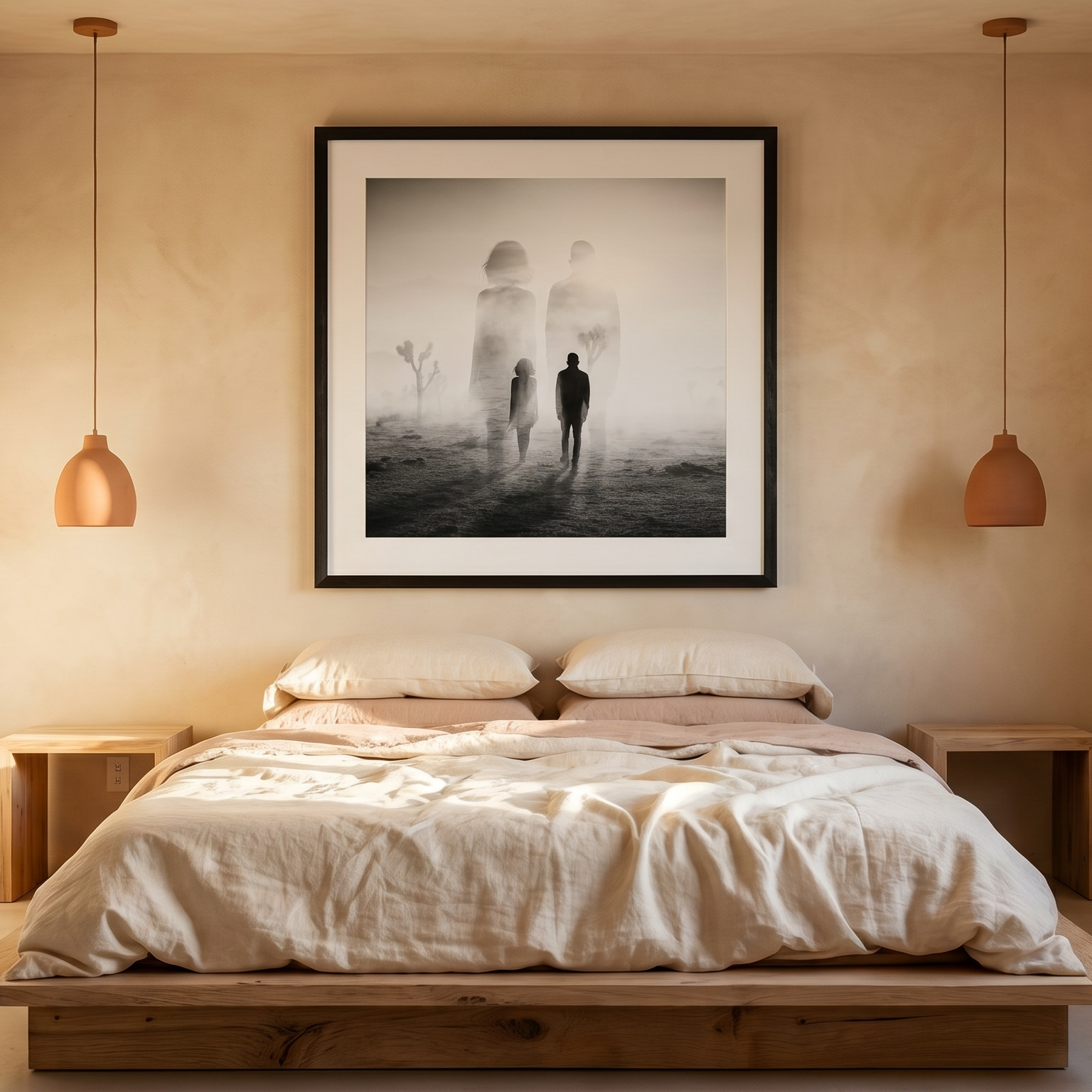
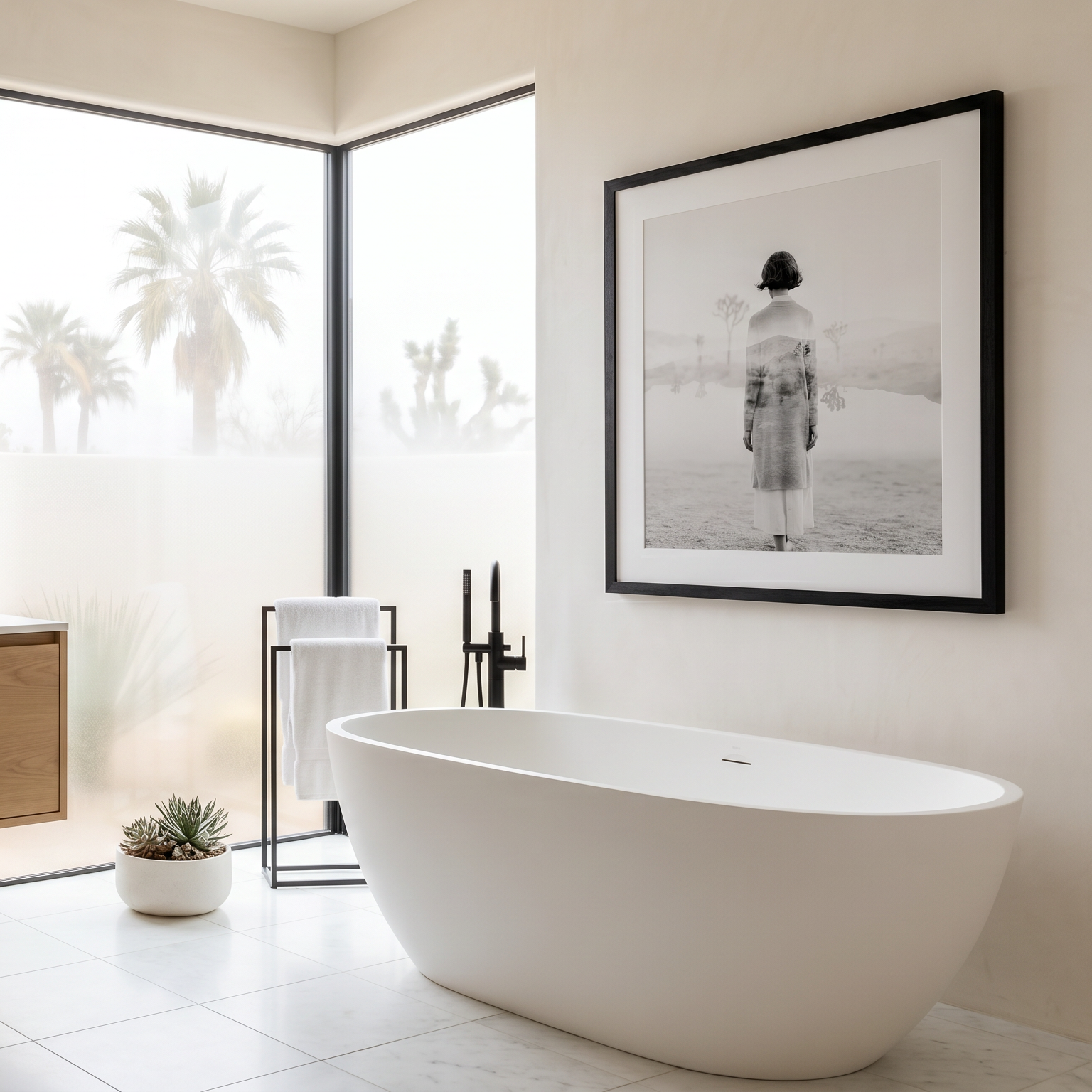
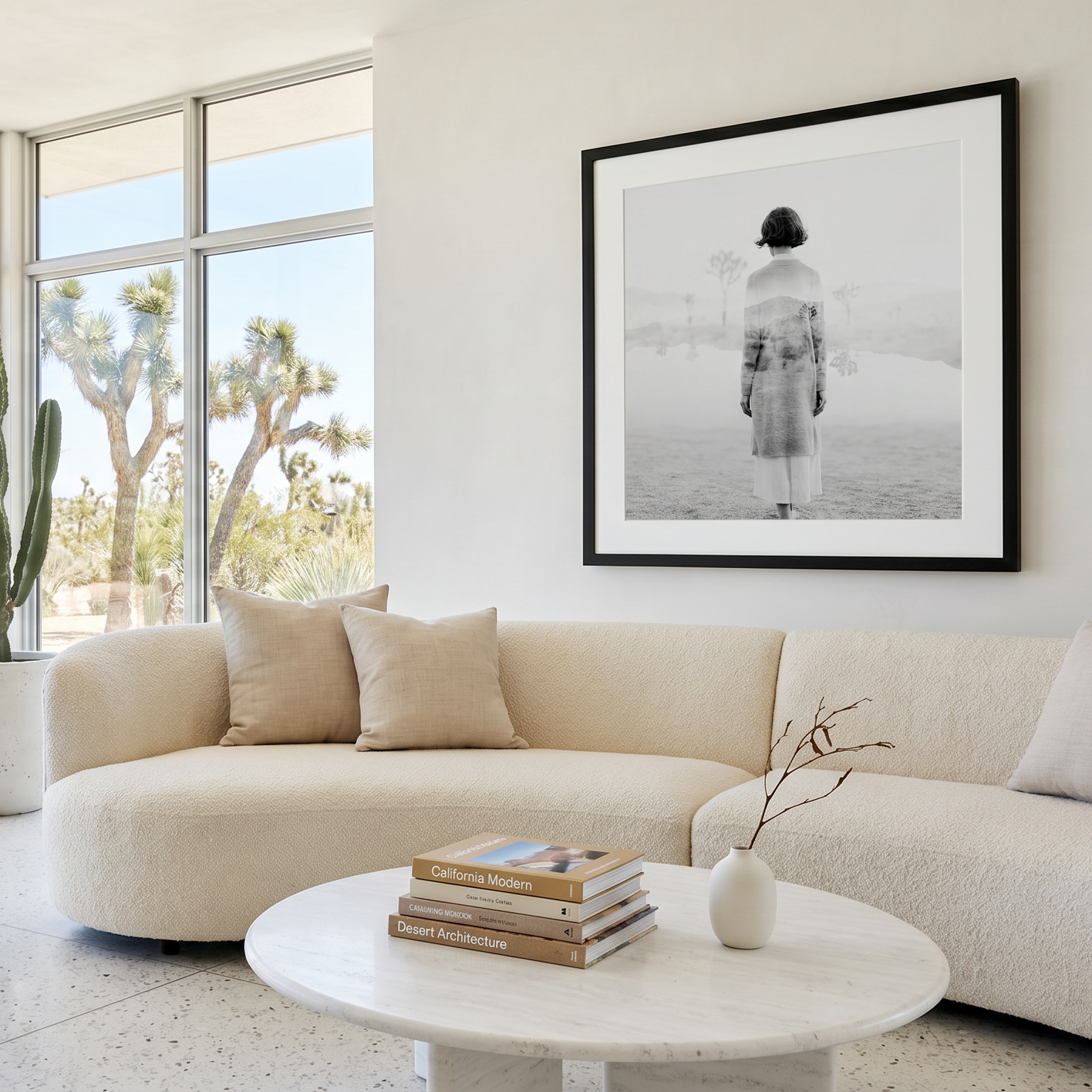
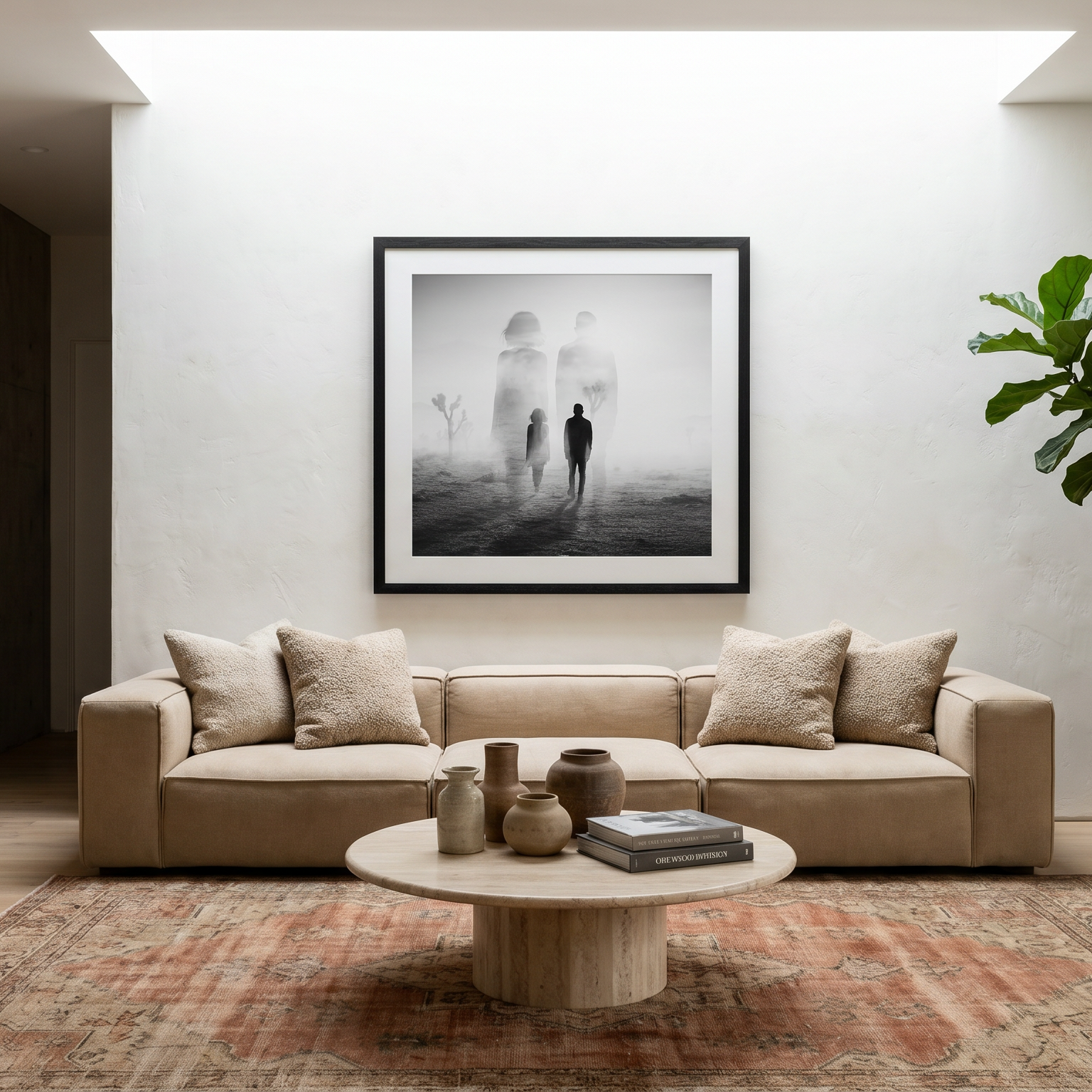
I have always loved surrealism, the same quality that runs through my Dreamy & Surreal collection: the way it lets an image sit somewhere between waking and dreaming. Each print in the Joshua Tree series is a double exposure. A figure is layered with the desert itself, so stone, scrub, and branching trees show through a coat, a skirt, the shape of a shoulder. In some frames the figures stand solid and grounded. In others they dissolve into mist until you are not sure where the person ends and the landscape begins.
Every figure is turned away from the viewer. Without a face to read, you step into the frame instead of observing it. You become the one walking out into the fog, the one standing still while the land moves through you.
"We carry the places that have held us. These images are my way of making that visible."
The Three Joshua Tree Prints
Three images, each a different moment in the same dream. Together they read as one slow walk into the desert.
Why Minimal Desert Art Calms the Nervous System
My background is 25 years photographing luxury resorts and spas around the world, places designed for relaxation at every level. That work, along with my own study of nervous system regulation and somatic healing, shaped what I call sensorial design: spaces that engage all the senses and help the body feel safe and at home. So much of it is about what we leave out. The desert is the purest version of that idea: an open horizon, soft light, very little asking for attention. When the eye has room to rest, the nervous system follows. Breathing slows. Shoulders drop.
These prints carry that spaciousness into a room. The palette stays in the soft middle of black and white, mostly mist and pale sand, with the darkest tones saved for a single silhouette or the line of a tree. They do not compete with a space. They give it somewhere to exhale.
How to Style Black and White Desert Art at Home
Here is how the series lives in a home. Soft, low-contrast images suit the rooms meant for rest, and they pair naturally with raw linen, plaster walls, pale wood, and stone, which echo the same sand and ash tones. For more of my prints shown in real rooms, visit Art in Spaces, or read The Language of Touch for how texture completes a space.
A Place to Return To
Art that holds a memory of place keeps giving something back. You notice the fog differently in the afternoon light. A figure you once read as leaving starts to feel like it is arriving. The image stays the same, and you keep changing in front of it.
However you hang these prints, choose the place where you most want to soften. They are images to come home to.
Frequently Asked Questions
Who created the Joshua Tree fine art prints?
The series was created by Trinette Reed, a fine art photographer, artist, and interior designer based in the San Francisco Bay Area and the founder of Sensorial Designs.
What is double-exposure art?
A double exposure layers two images into one frame. In this series, a human figure is combined with the desert landscape, so the land appears to move through the body.
How much do the Joshua Tree prints cost?
Prints start at $89, making them an affordable way to bring museum-quality fine art home. Each is printed on archival Hahnemühle Photo Rag paper in sizes from 12x12 to 48x48 in., unframed or in a black, white, or natural wood frame. Shipping is free on all Sensorial Designs fine art prints and frames.
What rooms suit black and white desert art?
Bedrooms, bathrooms, reading corners, and living rooms with natural materials like linen, plaster, pale wood, and stone. The soft, low-contrast tones support rooms meant for rest.
What is sensorial design?
Sensorial design shapes a space through all the senses, including texture, sound, scent, light, and beauty, to create a felt sense of calm, safety, and sanctuary.
Bring the desert home
Every print in the Joshua Tree series is personally created by me, with free shipping on all fine art prints and frames.
Shop the Joshua Tree Series